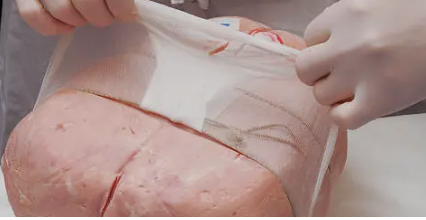
The product leaves your factory in perfect condition. It passes inspection, looks flawless, and is ready for delivery. Then, somewhere between the production line, the warehouse, the transport truck, and the customer, something changes. A few scratches appear. Edges become scuffed. Moisture leaves marks. By the time the shipment arrives, the product that was once sale-ready is suddenly a discount item—or worse, rejected stock.
For Australian manufacturers, distributors, and suppliers, this kind of “invisible damage” can be expensive because it rarely shows up as a manufacturing defect. The issue often happens after production. This is where stockinette bags can provide a surprisingly simple protective layer, helping shield products from the everyday friction, abrasion and handling that can quietly erode profit margins.
The Cost of Damage That Nobody Sees
Consider a fictional Australian manufacturer, Southern Edge Components, that supplies premium finished products to retailers across Sydney, Melbourne, Brisbane, and Adelaide.
Its production team has a strong quality-control process. The team inspects every item before it leaves the factory, and its defect rate is impressively low. Yet management notices that customer complaints are increasing.
The products aren’t technically defective. Instead, customers report small scratches, surface scuffs and marks that weren’t present during final inspection.
The financial impact is greater than expected. Southern Edge isn’t simply replacing a few damaged products. It is absorbing freight costs, labour, inspection time, reprocessing expenses, and customer service overheads. In some cases, perfectly functional products are sold at reduced prices because their appearance no longer meets the customer’s expectations.
This is the hidden cost of product protection: the item itself may be fine, but its commercial value has been damaged.
When “Good Enough” Packaging Isn’t Good Enough
Packaging is often evaluated according to whether it prevents major damage. If a product arrives intact, the packaging is considered successful.
But that definition can be too narrow.
For products where appearance matters, the difference between “intact” and “saleable” can be significant. A minor abrasion may not affect performance, but it can still affect whether a customer accepts the product at full price.
This is where stockinette bags can become part of a broader damage-prevention strategy rather than simply another packaging component.
● Reducing surface contact: A protective packaging solution can help minimise direct rubbing between products and other packaging materials during storage and transport.
● Adding a buffer during handling: Products are inevitably moved throughout the supply chain. A flexible protective covering can provide an additional barrier against everyday scuffing and abrasion.
● Supporting presentation quality: When customers expect a clean, polished or undamaged finish, protecting the product before it reaches the final destination can help preserve its perceived value.
The principle is particularly relevant across Australia’s long and geographically dispersed supply chains. A product travelling from a manufacturer in Victoria to a customer in Queensland may encounter multiple handling points before reaching its destination. Every transfer creates another opportunity for cosmetic damage.
The Australian Supply Chain Is Where Small Problems Multiply
Australia’s geography makes logistics an unavoidable part of many businesses. Products may travel significant distances by road, rail or a combination of transport methods before reaching customers.
That distance can magnify seemingly minor packaging weaknesses.
Imagine a product that experiences a tiny amount of movement every time a vehicle accelerates, brakes or turns. One incident might not matter. Thousands of repeated movements over a long journey can tell a different story.
Moisture can introduce another variable, particularly when products move through changing environments or are stored in facilities where condensation and humidity are concerns. Stockinette bags may provide an additional layer between the product and the external handling environment, depending on the specific material, application and packaging configuration.
The objective isn’t necessarily to add layers of packaging everywhere. It’s to identify where the product is most vulnerable and add protection where it delivers the greatest commercial return.
Turning Packaging Into a Waste-Reduction Strategy
Southern Edge Components eventually discovers an uncomfortable truth: its biggest losses aren’t caused by poor manufacturing. They’re caused by products leaving the factory in perfect condition and arriving in a condition customers don’t consider perfect.
The company begins testing additional protective measures at key points in its supply chain. The goal is simple: prevent damage before it happens, rather than pay to fix it afterwards.
For Australian businesses, this approach can also support broader waste-reduction goals. Preventing one product from becoming damaged stock is often more efficient than repairing, repackaging, discounting or disposing of it after the damage has already occurred.
The right protective solution depends on the product, material, dimensions, and supply-chain conditions. However, the underlying lesson is universal: design protection around the product’s actual journey.
Don’t Wait for the Customer to Find the Damage
The most expensive packaging problem may be the one that never appears in your manufacturing reports.
If your products leave the facility in excellent condition but arrive with scratches, scuffs, or moisture-related marks, the issue may not be your production process. It may be the journey in between.
Stockinette bags are one component of a layered approach to protecting vulnerable products, particularly when surface presentation and finish influence customer acceptance and resale value.
Next, conduct a simple packaging journey audit. Select a product that ships regularly, document every stage from final inspection to customer delivery, and identify exactly where surface damage could occur. Then compare the cost of that damage—including returns, labour, freight, rework and lost customer confidence—with the cost of introducing targeted protective packaging.
The question isn’t whether your product can survive the journey. It’s whether it can arrive looking exactly as good as it did when it left your factory. That’s where effective packaging earns its value.