Japanese Landscape Design is a blend of artificial and natural beauty. It reflects the unique aesthetic taste of the Japanese people. The insular country’s distinct seasons are the inspiration for Japanese garden designs. Traditionally, Japanese gardens have been characterised by symmetrical structures and rock gardens. However, many people are experimenting with Japanese landscape design to create unique gardens.
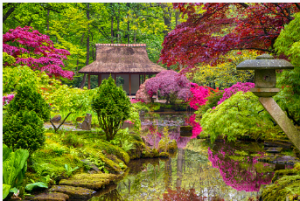 Japanese Landscape Design Adelaide is a complex process. It often only reaches its full potential as nature is constantly changing. As a result, most Japanese landscape designs never get completed. As a result, it is important to be prepared to make changes over the years. Whether you’re looking for a low-maintenance or high-maintenance Japanese landscape design, there’s a style for you.
The central feature of a Japanese landscape is a hill or mountain. This hill is usually high and represents a high peak. Another hill is usually lower and connected to the first one. The third hill is often placed in the foreground and is intended to represent a spur. A lowland area is also part of the landscape and is supposed to represent a stream, road, or hamlet.
S-curve
In Japanese Landscape Design Adelaide, the S-curve creates a sense of depth. A path that takes an S-curve instead of a straight line will invite visitors to explore more deeply. An S-curve also creates a sense of mystery. The “hide and reveal” technique can further enhance this effect by obscuring a path naturally.
Bonsai
Bonsai trees can create a rich, layered atmosphere in a Japanese landscape design. These plants are often mixed with non-tree plant specimens to create a unique landscape. In some cases, the bonsai are also interspersed amongst saikei, a type of group planting.
Stone setting
Stone setting is a very important aspect of Japanese landscape design. There are several rules about properly placing stones in a Japanese garden. For example, the landscaper must place stones with the most beautiful side toward the main viewpoint. Less beautiful stones must be placed at an angle. There should also be more horizontal than vertical stones in a Japanese garden. There should also be several “running away” and “chasing” stones, and other stones should support all stones.
S-zigzag
In Japanese landscape design, the S-zigzag is a natural element that softens the hard edges of a straight line. It is often used to create the appearance of a winding path, and it is also used to emphasise the curves in a garden. This pattern is also used in the shape of highways and rivers and in the lines that divide land from the sea.
Symbolism
Japanese landscape design has evolved through the centuries. It began in the seventh century with the construction of the imperial palace in Heian. The gardens were inspired by Chinese design and strived to preserve natural beauty. They were filled with flowering trees and shrubs, carefully chosen for their symbolic meaning. For example, bamboo symbolises resilience, while pine represents longevity. Symbolism also plays an important role in Japanese landscape design, which includes lakes, islands, and shrines.
Spirituality
Spirituality is a common thread in Japanese landscape design. For example, the shinden style, the dominant style of Japanese gardens from the Heian and Kamakura eras, drew inspiration from the Western Paradise described in the Jodo scriptures. The Jodo sect of Buddhism believes that rebirth can be found in Western Paradise, so gardens in this style often include a pavilion enshrining Amida Buddha and a pond symbolising the Western Ocean. A great example of this style of Japanese gardens can be found in the Byodo-in Temple in a town southeast of Kyoto.
Conclusion
Japanese landscape design is a unique blend of natural and artificial beauty. It represents the unique aesthetic taste of the Japanese people and is inspired by the distinct seasons of their insular country. The combination of both natural and artificial elements creates a peaceful atmosphere that is sure to please. So, Japanese landscape design is the perfect solution if you want to incorporate more nature into your garden or want to add a little flair to your existing yard.