In Australia’s diverse agricultural landscape, farmers are constantly evaluating the most efficient methods for baling hay, silage, and straw. Among the most debated choices is whether to use net wrap or traditional baler twine. Both have their merits, and the decision often depends on the farmer’s priorities—be it cost, time, or storage quality. Understanding the strengths and weaknesses of each option is essential for making the right investment.
Understanding Net Wrap and Twine
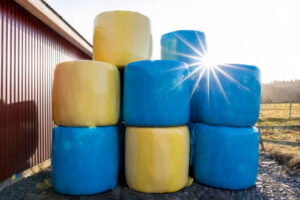
Net wrap is a woven plastic mesh designed to secure bales quickly and provide uniform coverage. It has become increasingly popular in Australia due to its ability to reduce baling time and enhance bale protection from the weather. On the other hand, baler twine is a more traditional method, consisting of synthetic or natural fibre strands that bind bales together. Twine remains widely used, especially in smaller operations or where equipment is not compatible with net wrapping systems.
Speed and Efficiency in the Field
One of the biggest advantages of net wrap is the significant time savings during baling. In most cases, net wrapping takes only two to three revolutions to secure a bale, compared to up to 20 revolutions for twine. For large-scale Australian operations, particularly in regions like New South Wales or Western Australia, where time is critical during harvest, this speed can mean the difference between beating the weather and losing valuable crop quality.
However, twine does have its place, especially for farmers who produce smaller quantities of hay or operate in regions where baling speed is not the top priority. Twine is also more forgiving in terms of equipment requirements and maintenance, making it a practical choice for low-volume users.
Bale Protection and Storage Benefits
When it comes to protecting bales from Australia’s unpredictable climate, net wrap generally offers better coverage. It forms a consistent, tight outer layer that shields against rain penetration and UV degradation, which is crucial in hot, sunny regions like Queensland. This can help maintain forage quality for longer periods, reducing spoilage and waste.
Twine, while less effective in blocking moisture, still provides adequate hold for short-term storage or where bales are stored indoors. For farmers in cooler, drier climates such as Tasmania, twine may still be a cost-effective and reliable choice.
Cost Considerations
One of the most common reasons farmers stick with twine is its lower upfront cost. Twine rolls are generally cheaper than net wrap, and balers that use twine are often less expensive to purchase and maintain. However, net wrap can save money in the long run by reducing labour hours, fuel costs, and crop losses from weather exposure.
For example, a large-scale hay producer in Victoria may find that the increased baling speed and improved bale preservation of net wrap outweigh the higher initial investment. Meanwhile, smaller-scale farmers may prefer the simplicity and affordability of twine, especially if their operations don’t require fast, large-volume baling.
Environmental and Recycling Factors
Sustainability is becoming an increasingly important consideration in Australian agriculture. Both net wrap and twine are typically made from plastics, but recycling opportunities vary. Some regions have programs for collecting and recycling agricultural plastics, while others still rely on landfill disposal.
Net wrap can sometimes be more challenging to recycle due to its woven structure, but innovations in recycling technology are improving accessibility. Twine, being easier to compact and store before recycling, might be more convenient for farmers aiming to reduce their environmental footprint—provided recycling options are available in their area.
Choosing What’s Right for Your Farm
Ultimately, the decision between net wrap and twine should be based on your farm’s scale, climate, storage methods, and budget. Large, high-output operations in areas prone to wet or extreme weather often benefit from the efficiency and protection of net wrap. Smaller farms or those in drier climates may find that twine meets their needs at a lower cost.
It’s also worth considering your long-term goals. If expanding production or upgrading equipment is on the horizon, investing in a net wrap-capable baler now could pay off in future efficiency gains. Conversely, if your current system is working well and your production scale is stable, sticking with twine may be the most cost-effective approach.
Final Thoughts
Both net wrap and twine have proven their value in Australian farming. There is no one-size-fits-all answer—the better option depends on balancing cost, efficiency, climate conditions, and bale storage needs. By carefully weighing these factors, Australian farmers can choose the solution that best supports their productivity and profitability for seasons to come.